Blog
Screw Sludge Dewatering Machines for Wastewater Treatment Plants from TNW Co., Ltd
Screw sludge dewatering Machines for Wastewater Treatment Plants from TNW Co., Ltd
For operators of municipal wastewater plants and upgrading projects, sludge dewatering brings heavy costs and compliance pressure. The excess activated sludge from biochemical tanks holds 98%~99.5% moisture, featuring large volume and high transportation costs, while environmental codes impose strict standards on cake dryness and sludge reduction.
Traditional dewatering equipment including belt filter presses, plate-and-frame filter presses and centrifuges have obvious drawbacks. Belt presses suffer frequent cloth clogging by hair and fibers with massive water consumption for daily high-pressure washing and constant manual cleaning. Plate-and-frame machines run intermittently requiring full-time staff for discharging and washing, unable to match round-the-clock sludge output. Centrifuges generate loud noise and high power consumption, with fine sludge leakage leading to repeated rectification due to excessive suspended solids in filtrate.

Now TNW screw sludge dewatering machines become the mainstream choice for new township sewage stations and expansion renovation of urban wastewater plants. Suitable for municipal activated sludge, combined sewer sludge and river dredging sediment, they deliver stable, labor-saving and low-energy performance verified by thousands of plant projects to meet continuous operation demands.
1. Structure Optimized for Plant Sludge Characteristics
Municipal sludge has fine particles and high viscosity, with water quality fluctuating greatly in rainy seasons or with domestic discharge and foreign pipeline impurities, which easily causes sludge leakage, ring clogging and unstable dryness on generic screw presses. TNW upgrades structures targeted at plant working conditions:
Self-cleaning moving & fixed ring stack
Alternating 304/316 stainless steel rings slide against each other as the screw rotates to automatically scrape sticky sludge without shutdown disassembly and flushing. Hair and fine fibers in municipal sludge will not accumulate to block equipment, maintaining steady dewatering efficiency year-round.
Variable-diameter gradient screw for high-moisture raw sludge
The screw adopts gradually narrowed pitch and diameter: gravity thickening removes free water at the front, mild squeezing in the middle and deep compression at the end via back pressure plates. Raw sludge with 99% moisture can be fed directly without independent thickening tanks to cut civil construction costs, ideal for retrofits of old small plants without extensive excavation.
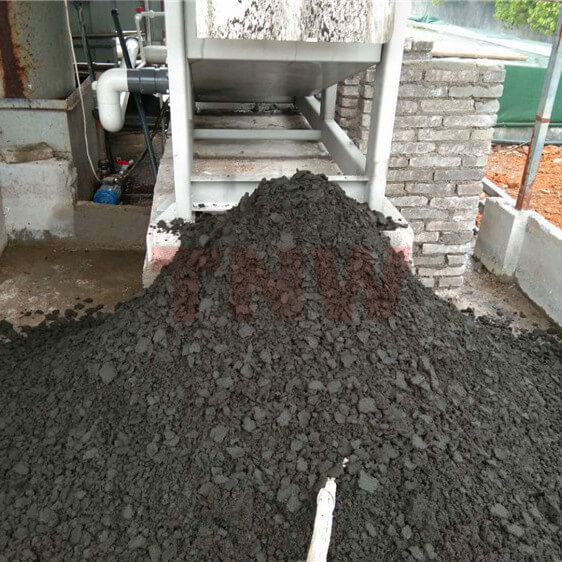
Field tests show cake moisture of conventional municipal sludge stably hits 75%~80%, cutting sludge volume by over 70% and slashing outbound transportation expenses.
Single-shaft and twin-shaft models covering all plant capacities
Compact low-power single-shaft units (TNW201, TNW351) fit small township and community sewage stations. Heavy-duty twin-shaft models (TNW352, TNW402) for medium county-level plants feature dual dewatering channels with doubled throughput and shared compression load to avoid overload jamming during peak sludge inflow in rainy seasons. Large urban plants can deploy multiple units in parallel for flexible modular expansion.

2. Full-Automatic Linked Control for Low-Manpower Plant Operation
Most municipal plants have limited on-site staff unable to monitor dewatering sections 24/7. TNW screw presses support intelligent full-process linkage for unattended operation:
Standard Siemens PLC variable-frequency control connects seamlessly with TNW three-chamber PAM dosing units and sludge feed pumps. The system automatically raises flocculant dosage and reduces screw speed for thicker sludge, and cuts chemical feed for dilute inflow, lowering PAM consumption by over 20% versus manual adjustment.
Multi-layer safety alarms trigger sound-light reminders for chemical shortage, water cut-off, spindle overload and sludge blockage, with auto shutdown to protect motors and screws during overnight unattended running.
Integrated skid-mounted packages with pre-calibrated linkage between dosing units and screw presses only require water, power and sludge pipeline connection for on-site commissioning, eliminating repeated parameter coordination with multiple suppliers.
3. Graded Material Options for Corrosive Plant Environments
Wastewater quality varies across regions. Coastal plants face high chloride ion levels while old pipelines may carry trace industrial wastewater demanding strong corrosion resistance. TNW avoids cheap universal carbon steel with customized material solutions:
304 stainless steel rings and spindles for inland municipal and township domestic sewage with passivated welds for 8+ years of service life.
Full 316 stainless steel wetted components for coastal salt fog and wastewater mixed with mild industrial effluent, resisting acid, alkali and chloride without perforation or leakage after long-term underwater immersion.
Tungsten carbide coated screw blades for sediment-laden combined sewer sludge to withstand abrasive grit, extend core component lifespan and reduce annual spare part costs.
The fully enclosed unit runs below 70dB noise and matches simple deodorization devices to pass environmental inspections without odor diffusion.

4. Lower Comprehensive Operating Costs vs Traditional Dewatering Equipment
Many purchasers only compare bare-machine prices while ignoring long-term hidden costs on labor, power, chemicals and maintenance. TNW screw presses deliver prominent long-term advantages:
Sharp labor reduction: Belt and plate presses need 1–2 full-time workers daily for discharge, washing and cloth cleaning. Screw presses run automatically, only requiring 2–3 hourly spot checks with no night-shift attendants needed.
Lower water & power consumption: No high-pressure washing pumps, only small lubrication spray water. Power consumption per ton of dry sludge is far below centrifuges and belt presses to cut annual electricity bills.
Less maintenance and controllable spare part costs: No high-consumption filter cloth or plates. Wearing parts are limited to bearings and seals with genuine factory spare parts supplied at cost without overpriced components or lost after-sales support.
Stable sludge reduction: Consistent dry cake reduces outbound sludge tonnage and lowers landfill, incineration and compost disposal fees, far offsetting the initial equipment price gap over time.
5. Full-Cycle Factory Service for New Plants & Retrofits
As an in-house manufacturer with complete sheet metal fabrication, assembly and 72-hour full-load water testing lines, TNW produces all TNW series screw presses without OEM markup. Quotations list full details of materials, electric control, accessories and warranties with zero hidden charges.
Pre-sales free services: On-site plant layout survey, sludge sample lab dewatering tests, single/twin-shaft model matching and customized factory quotations based on measured sludge moisture and daily output.
On-site delivery & commissioning: Professional technicians nationwide install, calibrate linkage and train operators on daily operation, troubleshooting and flocculant mixing.
Comprehensive warranty: 12-month warranty on core parts including spindles, drive motors and PLC systems, with remote routine guidance and on-site rush maintenance for critical breakdowns to minimize plant shutdown losses.
Thousands of running projects cover township stations, county medium plants, urban municipal facilities and industrial park sewage plants. General contractors and water groups frequently reorder TNW equipment for phase-two expansion and old press replacement due to reliable dewatering performance and complete after-sales service.
Practical Selection Tips for Plant Screw Presses
Choose heavy-duty twin-shaft TNW352/402 models for high daily sludge output and volatile rainy-season inflow; single-shaft units wear faster under sustained full load.
Select full 316 stainless steel units for coastal plants or sites receiving trace industrial wastewater to prevent premature corrosion leakage of 304 material.
Adopt integrated skid-mounted packages for cramped machine rooms and old plant retrofits to avoid large-scale civil works.
Use cationic PAM matched with TNW automatic dosing units to prevent caked powder and unstable liquid concentration that impair dewatering results.
Conclusion
Sludge dewatering is a key procedure for wastewater plants to achieve sludge reduction and environmental compliance. A well-matched stable dewatering unit cuts operating burdens on labor, water, power and sludge disposal.
Optimized with field operation data from thousands of municipal plants, TNW series screw sludge dewatering machines offer full-size options for all-scale wastewater facilities, with automatic linked supporting equipment, corrosion & wear resistance and easy maintenance. They serve as cost-effective options for new sewage projects and upgrades of outdated belt or plate filter presses.
Share your plant’s daily sludge yield, water quality and machine room dimensions with TNW technical staff for free customized selection schemes and detailed factory quotations.